Underwritten Weekly

The risk behind the headline: A blog about the genuinely existing world of global insurance

  • The Planes That Don’t Exist

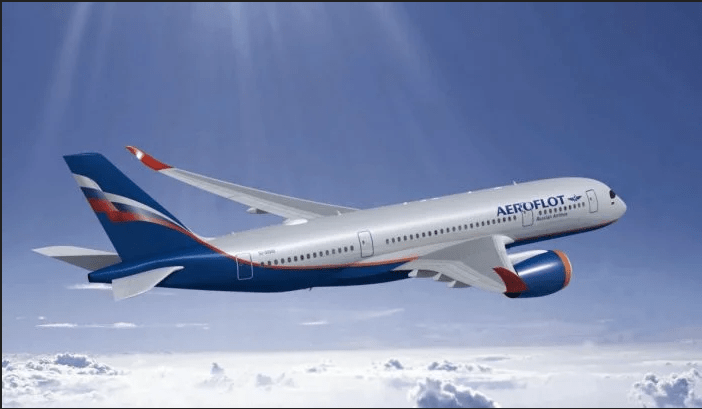
    Right now, as you read this, there are roughly 400 commercial aircraft flying passengers around Russia that, legally speaking, no longer exist.

    They take off from Sheremetyevo. They land at Pulkovo. Families board them for holidays to Sochi. Business travellers sleep through the Novosibirsk redeye. The planes are real. The seats are real. The turbulence is extremely real. But according to the London Commercial Court, these aircraft suffered a total loss on 10 March 2022. They are, in insurance terms, gone.

    The largest aviation insurance loss in history, and it turns on a question that sounds simple but absolutely isn’t: what does it mean to lose something that hasn’t been destroyed?

    How Do You Lose 400 Planes?

    You’d think it’d be difficult. It is not.

    When Russia invaded Ukraine in February 2022, the Western sanctions response was fast and broad. EU and UK regulations prohibited leasing aircraft to Russian entities. The lessors, companies like AerCap, the world’s largest aircraft leasing firm, were legally required to terminate their leases and get their planes back.

    They tried. They issued grounding notices. They sent termination letters. They did everything the contracts said they should do.

    Russia’s response was blunt. On 10 March 2022, Government Resolution No. 311 banned the export of foreign-leased aircraft. A week later, new legislation let Russian airlines re-register these planes on the Russian civil aviation register, binning the certificates of airworthiness issued by Ireland and Bermuda where most had been registered.

    Translation: we’re keeping them. Good luck.

    The lessors couldn’t repossess. The airlines wouldn’t return. The Russian state had legislated to make sure of it. Around 500 aircraft, worth north of $10 billion, stuck behind a legal iron curtain.

    Dead But Flying

    Here’s the thing that makes this case genuinely weird. These planes aren’t sitting in hangars gathering dust. Russian airlines are operating them daily: domestic routes, international routes, carrying actual passengers and maintained, in a fashion, without Boeing or Airbus support, without legitimate spare parts, without the oversight frameworks that the rest of the world considers fairly important when it comes to keeping commercial aircraft in the air.

    The planes are alive in every practical sense. They burn fuel. They accumulate flight hours. They wear out.

    But the court says they’re dead.

    What Does “Lost” Actually Mean?

    This landed in the Commercial Court as a mega trial running from October 2024 to January 2025. Six lessors. 147 aircraft. 16 standalone engines. 18 Russian airlines including Aeroflot. Over $4.5 billion in insured value. About 70 barristers. The legal profession’s answer to a royal wedding, except everyone’s arguing about whether a plane you can see on FlightRadar24 counts as missing.

    Mr Justice Butcher’s test: as of any given date, was the deprivation of possession, on the balance of probabilities, permanent?

    Not “has the plane been destroyed” Not “is it damaged beyond repair” but: are you getting it back?

    He concluded the answer became no on 10 March 2022, when GR 311 came into force. From that moment, Russia had legislated against return. The political situation offered no realistic prospect of reversal. The planes were permanently lost, not because they’d ceased to exist, but because the lessors had been permanently deprived of them.

    Insurance is comfortable with destruction. A plane crashes, it burns, you count the wreckage and write a cheque. Deprivation without destruction is a different animal entirely. The insured asset is still out there, still functioning, still generating value: just not for you. Does that count as a total loss?

    It does. Apparently.

    Who Pays? (And Why AerCap Argued Against the Obvious)

    Aircraft insurance splits into two buckets: All Risks (AR) cover for the everyday stuff: crashes, mechanical failure, ground damage and War Risks (WR) cover for the geopolitical stuff: confiscation, seizure, detention by government order.

    Justice Butcher ruled this was a war risk loss. Russian government action. Restraint. Detention. Open and shut, you’d think.

    Except AerCap, the biggest claimant, actually argued it was an all-risks loss. Why would you fight to get your claim categorised as something it plainly isn’t?

    Money. AerCap’s war risk cover was capped at $1.2 billion against a total loss of about $2.1 billion. Their all-risks policy had no such cap. If you can squeeze a war into the “all risks” bucket, you get paid in full. If you can’t, you eat a billion-dollar shortfall.

    They couldn’t. The court held it was war risks, end of. AerCap recovered just over $1 billion: ok, not nothing, but roughly half what they’d lost. The insurance architecture, designed when nobody thought a G20 nation would nationalise 500 planes overnight, left a gap you could fly a 737 through. Which, ironically, someone in Russia is probably doing right now.

    The Grip of the Peril

    I love this one. Partly because it sounds like a le Carré title, partly because it’s doing more heavy lifting than almost any other doctrine in insurance law right now.

    Some war risk insurers had exercised review clauses to cancel their Russia cover before 10 March 2022. Their argument was clean: the loss happened after we’d cancelled. No policy, no claim. Sorry about your planes.

    The lessors’ response: grip of the peril. If an insured peril takes hold during the policy period, if it closes around you, then it doesn’t matter that the final blow lands after the policy expires. The peril had you in its grip while the cover was live. What followed was inevitable.

    Justice Butcher agreed. The Russian aviation authority had told airlines not to return aircraft as early as 5 March. GR 311 just formalised what was already happening. The peril had the lessors in its grip well before the insurers pulled the plug.

    This doctrine was relatively obscure before COVID. Justice Butcher himself built it out in the Stonegate pub closure case. Now it’s load-bearing for billions in aviation claims. One of those quiet legal principles that nobody outside a courtroom cares about until suddenly it’s the only thing standing between you and an uninsured loss the size of a small country’s GDP.

    What Happens Next

    It’s not over. Not even close.

    Chubb, Fidelis and Lloyd’s have permission to appeal. The Court of Appeal gets to decide whether Butcher was right on the war risk classification and the grip of the peril, and given there are billions riding on it, expect this to be fought hard.

    There’s a second wave coming too. The Operator Policy claims: under the Russian airlines’ own insurance, which lessors can access through cut-through clauses, goes to trial in October 2026. Under Russian law. A different legal system applying different principles to the same facts. That should be fun.

    And then the reinsurance cascade. Primary insurers pay out, claim from reinsurers, who claim from retrocessionaires, in the great chain of risk transfer that makes the whole market work. Every link is a potential fight.

    The Bit That Keeps Me Up at Night

    These aircraft are being flown without manufacturer support. No legitimate spare parts. No approved maintenance programmes. Russian airlines are cannibalising grounded planes for parts to keep the rest airborne. The airworthiness certificates that any Western regulator would want to see were suspended years ago.

    At some point, one of these planes is going to have a maintenance-related incident. It’s not pessimism, it’s statistics. And when it happens, the liability question will be unlike anything the market has seen. Who’s responsible for the airworthiness of a plane that was taken by government order, maintained outside every international framework, and flown on a registration that the original certifying authority doesn’t recognise?

    Nobody knows. But a lot of lawyers are going to find out.

    The $10 Billion Question

    Can insurance handle losses caused not by physical destruction but by geopolitical impossibility?

    The answer, for now, is yes but painfully, slowly, and with spectacular argument about who absorbs the hit. And the permanence question the court resolved isn’t unique to planes in Russia. It applies to any asset, anywhere, that becomes unreachable because the political ground shifts under it.

    Look at the world right now and tell me this is the last time it’ll happen.

    The planes are still flying. The insurance says they’re gone. Somewhere in that gap is the future of geopolitical risk transfer, and if the insurance market can’t figure out how to price it properly, the next $10 billion surprise is just a government resolution away.

    Until next week! Rob
  • The insurance problem only insurance can solve

    How the US government tried to replace the insurance market, but ended up proving why it can’t

    A few weeks ago, the United States government tried to do the insurance industry’s job.

    When the Strait of Hormuz effectively shut down after the US-Israel conflict with Iran began in late February, and war risk insurers issued cancellation notices, the White House stepped in. President Trump ordered the US Development Finance Corporation (DFC) to provide political risk insurance for all maritime trade through the Gulf. Naval escorts if needed. A $20 billion reinsurance facility. The full weight and might of the federal government behind it.

    This was, on paper, a remarkable moment. A sovereign state, the most powerful economy and military on earth, offering to underwrite one of the most critical straights in global trade. About a fifth of the world’s oil and liquefied natural gas flows through Hormuz. The stakes could hardly be higher.

    And then something revealing happened.

    The phone calls

    The DFC picked up the phone and called Chubb. Then Travelers. Then Liberty Mutual. Then Berkshire Hathaway, AIG, Starr and CNA. Within five weeks, the facility had doubled to $40 billion, and every dollar of it was being priced, underwritten and administered by commercial insurers.

    A DFC official was unusually candid about why: the agency doesn’t have actuaries. It doesn’t have the staff to be the focal point for the market.

    I love it: The US government announced a sovereign insurance guarantee for the most strategically important waterway on the planet only to discover it couldn’t deliver it without the industry it was ostensibly stepping in to replace.

    Chubb was named lead underwriter. Chubb sets the pricing. Chubb determines the terms. Chubb manages the claims. The government provides reinsurance capital and political authority. The market, via follow capacity, provides everything else.

    This isn’t a criticism of the DFC. It’s a structural observation. Insurance isn’t a product you can manufacture by presidential order. It requires actuarial expertise, distribution networks, claims infrastructure, and the trust of the people buying it. Shipowners aren’t protected by a press release. They need a policy wording they understand, issued by a party they trust, at a price that reflects the risk.

    That’s an extraordinarily difficult thing to build from scratch. The commercial insurance market has spent centuries building it.

    Meanwhile, in London

    While Washington was assembling its facility, Lloyd’s of London was already there.

    The Lloyd’s Market Association surveyed its marine war market in the first week after hostilities began. The results: 88% of participants still had appetite for hull war risks. Over 90% for cargo. Premiums had spiked: Hormuz transits were attracting rates of 1.5% to 3% of hull value, with US and UK linked vessels paying toward the top of that range, but cover was available.

    Lloyd’s CEO Patrick Tiernan confirmed it publicly. The London market never withdrew. It repriced because the risk had genuinely and dramatically changed: but it continued to quote.

    This distinction matters. The prevailing political narrative in early March was that insurance had been “cancelled” and that this was why ships weren’t moving. The LMA explicitly pushed back: insurance was available. The reason ships weren’t moving was that crews wouldn’t sail into a war zone. No piece of paper, government-backed or commercial, changes that calculation.

    That’s worth sitting with. The market did exactly what it’s supposed to do: it priced an extreme risk accurately and made cover available to those willing to accept it. The fact that few were willing isn’t a failure of insurance. It’s insurance working correctly: reflecting a reality that political statements prefer to gloss over.

    What this actually tells us

    There’s a popular misconception that insurance is a commodity. A thing you buy because you have to. A cost centre. A necessary friction.

    Hormuz exposes that for what it is.

    When geopolitics, energy security and global trade collide at their most extreme, the world doesn’t route around the insurance market. It can’t. The US government with its $40 billion facility, its naval assets, its political leverage, still needed commercial underwriters to make the thing function.

    The reason is structural. Insurance isn’t just capital. It’s a mechanism for converting uncertainty into something manageable. It requires the ability to price risk with precision, distribute it across a global network of capital providers, and create contractual structures that all parties from shipowners, cargo interests, lenders, charterers understand and trust implicitly.

    Governments can deploy warships. They can make statements. They can pledge capital. But they cannot replicate the infrastructure of risk transfer that the commercial market provides. Not quickly. Not at scale. And not with the granularity that individual risks demand.

    The speed gap

    There’s one more dimension to this that tends to get overlooked.

    The DFC took five weeks to assemble its $40 billion facility. That included recruiting seven major insurers, establishing eligibility criteria, building a sanctions and KYC vetting process, and coordinating with CENTCOM and Treasury.

    Lloyd’s underwriters were quoting Hormuz transits within days of the conflict starting.

    That gap, between political announcement and actual risk transfer capability, is where the commercial market lives. It’s the difference between saying you’ll provide insurance and actually providing it. Between a press release and a signed slip.

    In insurance, speed isn’t a nice-to-have. It is the product. The ability to assess, price and bind a risk while the broker is still on the phone is what makes the market the market. The DFC, for all its political backing, couldn’t match that. It wasn’t designed to.

    The real validation

    The instinct is to frame this as a story about government failure. It isn’t. The DFC facility may well prove useful: it adds reinsurance capacity at a moment when the market needs it, and it signals political commitment to keeping Hormuz open.

    But the deeper story is about what insurance actually is.

    It’s not a backstop. It’s not a safety net. It’s the mechanism that allows global trade to function in the first place. When the stakes were at their absolute highest: a war, a closed strait, oil prices spiking, 200 tankers stranded in the Gulf, the question wasn’t whether insurance was needed. It was who could actually deliver it.

    The answer, even when a sovereign state tried to step in, was the market.

    That’s not an opinion. That’s what happened.

  • A world without our market

    A World Without Our Market: An Awful Dream

    In which we remove one building from Lime Street and watch civilisation slowly unravel.

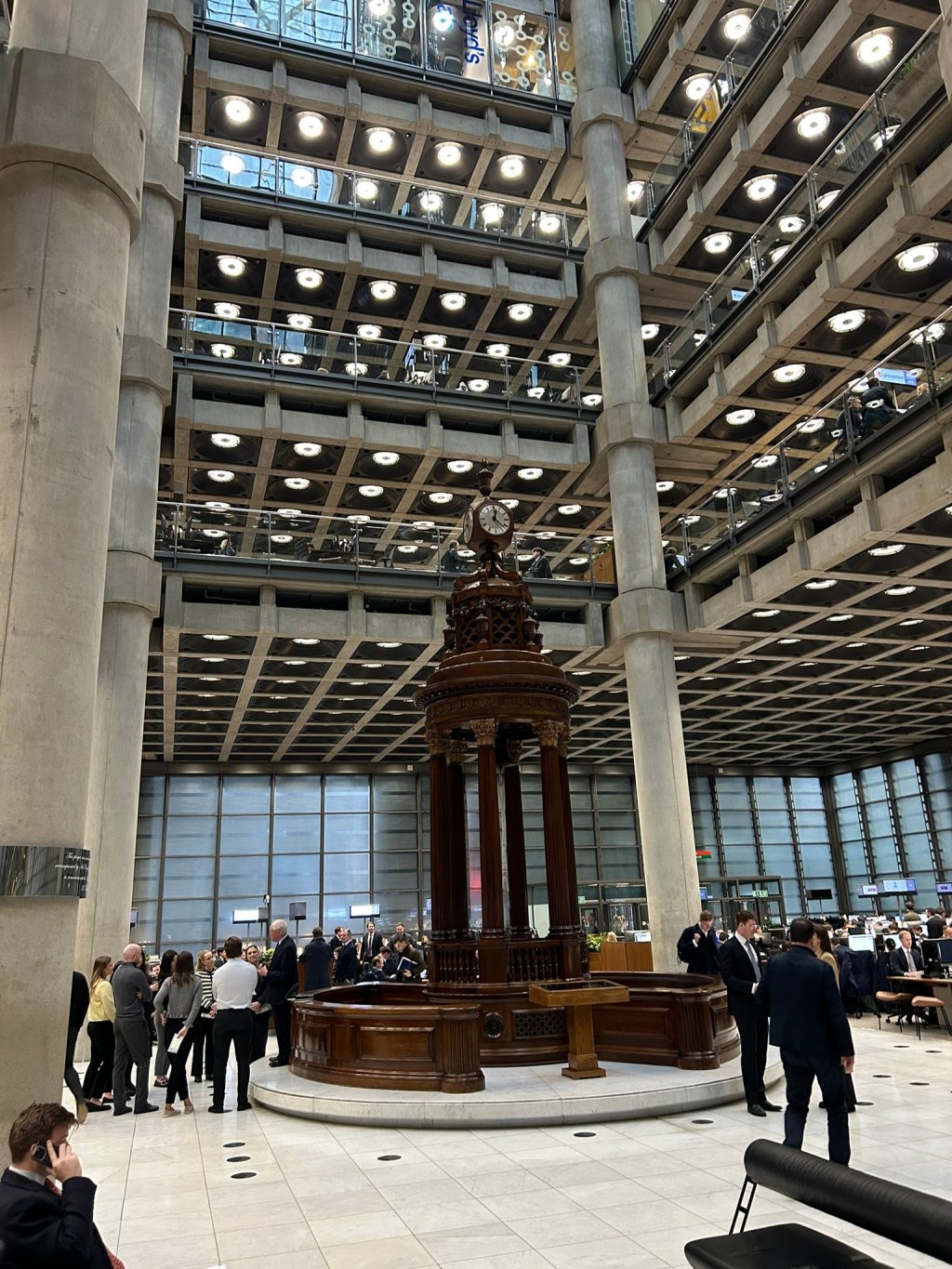
    It’s Monday morning. You wake up. You make your coffee. Everything feels normal. Except overnight, something has changed. Lloyd’s of London – your market, our market, the building, the concept, the whole bloody thing – has simply ceased to exist. Never happened. Edward Lloyd never opened his coffee house. The brokers never gathered. The underwriters never scratched a line.

    Nobody noticed at first. Then everything caught fire. Metaphorically. But also literally, because nobody could insure against it.

    Day One: Mild Confusion

    The first sign of trouble is surprisingly mundane. A cargo ship loaded with 40,000 tonnes of Brazilian coffee beans sets sail from Santos. The captain radios ahead. “Who’s covering us?” Silence. Not the dramatic kind. The kind where seventeen different people check their emails, find nothing, and quietly panic.

    The ship sails anyway. Three days later, it hits heavy weather in the mid-Atlantic. The cargo shifts. 40,000 tonnes of Brazilian coffee beans end up on the ocean floor. The shipping company calls its insurer. Its insurer doesn’t exist. The shipping company folds by Thursday.

    Meanwhile, a satellite launch in French Guiana is delayed. Not for technical reasons. The rocket is fine. The payload is fine. The weather is fine. But nobody can find anyone willing to say “yes, if this £400 million satellite explodes on the launchpad, we’ll pay for it.” Because the specific ecosystem of people who do that for a living – the ones who sit in a room on Lime Street, look at a risk that would make a normal person’s eyes water, and say “yeah, I’ll take 7.5% of that” – those people were never born, professionally speaking.

    The launch is postponed. Then cancelled. Then the whole programme is shelved.

    Space, it turns out, needs insurance.

    Week One: Things Get Weird

    Construction projects start stalling. Not because of supply chains or planning permission or the usual suspects. Because nobody can get contractors’ liability cover for anything genuinely complex.

    A hospital in Melbourne can’t open its new wing. An offshore wind farm in the North Sea sits half-built. The Channel Tunnel – or whatever version of it exists in this cursed timeline – is just a very expensive hole with water in it.

    Someone tries to set up a replacement. A group of bankers in New York announces “The Global Risk Exchange.” It lasts eleven days before they discover that pricing catastrophe risk is not, in fact, similar to pricing credit derivatives. They lose a spectacular amount of money on a typhoon in the Philippines and quietly close the doors.

    Nobody at the replacement thought to ask: “What happens when three bad things happen in the same quarter?

    We knew. We’ve always known. We’ve been answering that question since before electricity was invented.

    Month One: The Unravelling

    Airlines start grounding flights. Not all of them. But the ones flying over oceans, over conflict zones, over anywhere that isn’t extremely boring. Because aviation war risk cover – the very specific, very niche, very Lloyd’s product that keeps planes flying over conflict zones – doesn’t exist.

    Global shipping routes start changing. Vessels reroute around the Cape of Good Hope instead of through the Suez Canal, adding weeks to journey times, because hull war risk in the Red Sea is unplaceable. Container shipping costs triple. The price of everything goes up. Your Ikea bookshelf now costs £475.

    The film industry collapses. Not because people stop wanting entertainment. But because no one will insure a £200 million production against its lead actor doing something stupid on a motorcycle. Hollywood discovers that without completion guarantees and cast insurance, no studio will greenlight anything more ambitious than a man talking to a camera in a room.

    Every film is now a podcast.

    Month Three: Governments Panic

    Reinsurance – the insurance of insurance – barely functions. The companies that do exist are wildly overexposed, because the sophisticated retrocession market that Lloyd’s anchored simply isn’t there.

    A moderate earthquake hits central Italy. 6.1 on the Richter scale. Manageable. Except the local insurers can’t pay out, because their reinsurers can’t pay out, because the chain that would normally terminate in a room full of Lloyd’s syndicates terminates instead in a shrug, and an email that says “we regret to inform you.

    The Italian government bails out its insurance sector. Then the Spanish government. Then the Japanese government, after a fairly routine typhoon season turns into a full blown fiscal crisis.

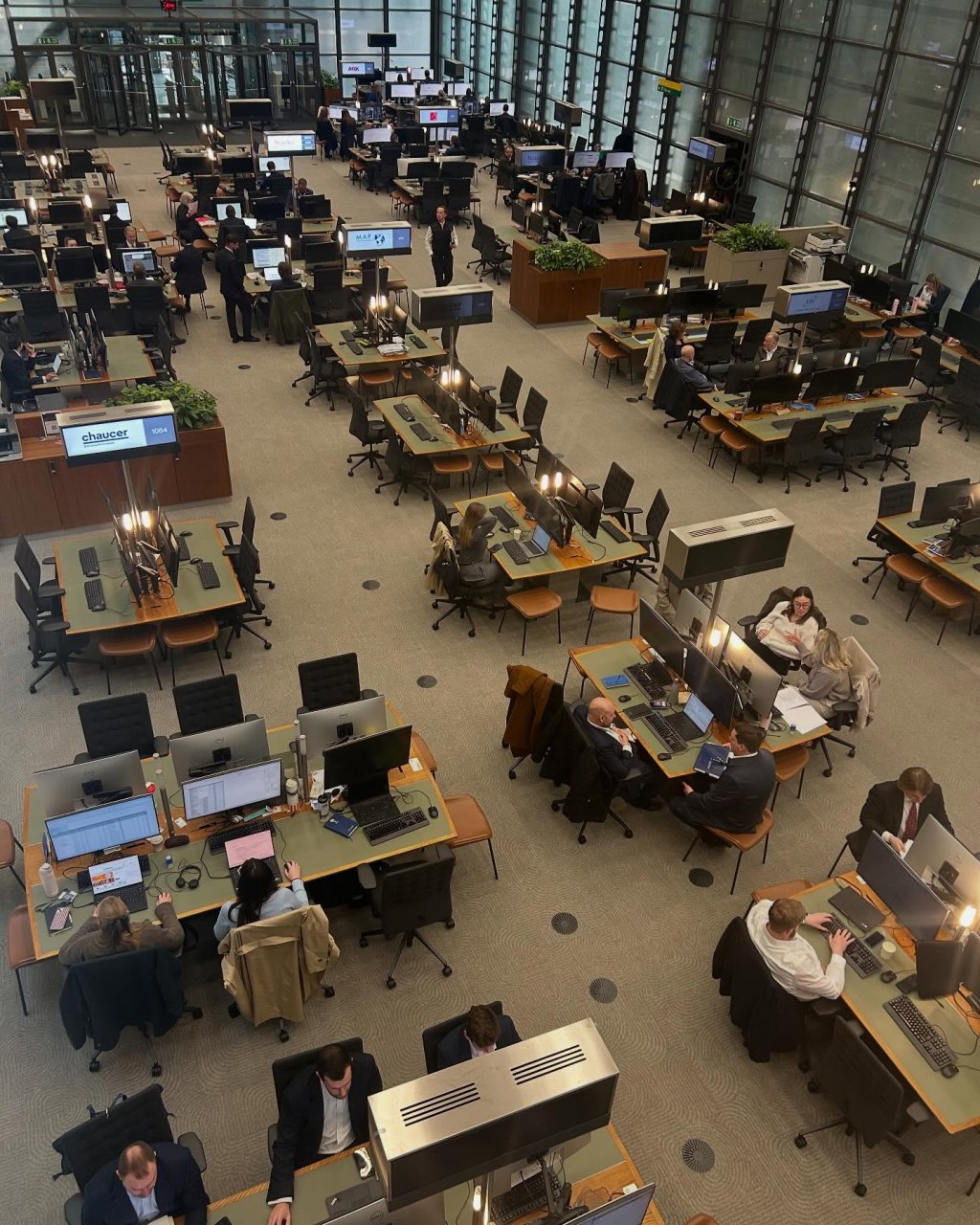
    Central banks start asking a question they’ve never had to ask before: “How much of global economic stability was quietly being underwritten by 50,000 people in a postmodern building in London?”

    The answer, it turns out, is: an uncomfortable amount.

    Month Six: Someone Discovers the Problem

    A think tank publishes a paper. It has a boring title – something like “Systemic Risk Transfer Gaps in the Absence of Centralised Specialty Markets” (don’t lie, you know you can imagine reading something this dry) – but the conclusion is anything but boring.

    The paper argues, with charts, that approximately 40% of global economic activity depends on the existence of specialty insurance and reinsurance capacity. Not directly. Not obviously. But in the same way that oxygen isn’t obviously important until you try to breathe without it.

    Without Lloyd’s, the paper explains, you don’t just lose an insurance market. You lose the mechanism by which the world says: “Yes, that risk is real, but we can price it, share it, and carry on.

    You lose the collective ability to be brave.

    Year One: The New Normal

    The world adapts. Humans always do. But the adaptation is ugly.

    Governments become insurers of last resort for everything. Taxes go up. Innovation slows down. Nobody builds anything that hasn’t been built before, because nobody can transfer the risk of it going wrong.

    The economy doesn’t collapse. It just gets smaller. Duller. More cautious. The world without Lloyd’s is a world that takes fewer chances, builds fewer things, and moves more slowly.

    Nobody sits in a room scratching lines on slips of paper. Nobody argues about aggregation. Nobody looks at a risk that seems impossible and says, “Tell me more.

    And when things go wrong – as they always do – there is no one to call.

    And here’s the uncomfortable truth:

    None of this works by accident.

    It works because thousands of small, fast, well-informed decisions are made every day. Risks are understood. Data is gathered. Judgement is applied. Capital is deployed.

    And the difference between a market that functions – and one that quietly breaks – is how quickly and confidently those decisions can be made.

    Because while the world will never know our names, it only works because of us.

    But you know. I know. That’s enough.

    I would like to clarify that this is a work of fiction and not a formal market submission. No underwriters were harmed in the writing of this email. A few brokers were, but that was strictly for my own amusement. Lloyd’s continues to exist, which is why your bookshelf still costs a reasonable amount and satellites occasionally make it to orbit.