A World Without Our Market: An Awful Dream
In which we remove one building from Lime Street and watch civilisation slowly unravel.
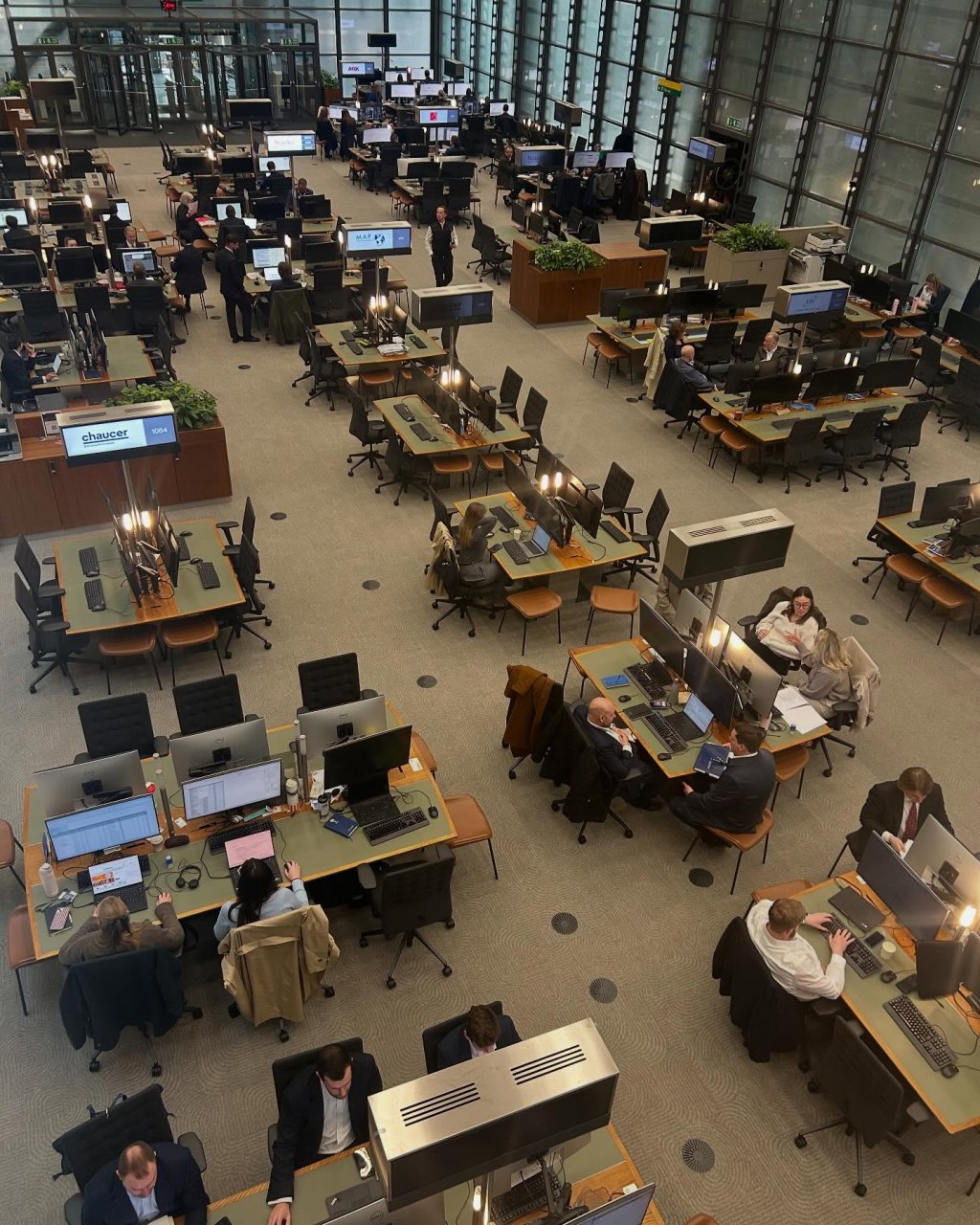
It’s Monday morning. You wake up. You make your coffee. Everything feels normal. Except overnight, something has changed. Lloyd’s of London – your market, our market, the building, the concept, the whole bloody thing – has simply ceased to exist. Never happened. Edward Lloyd never opened his coffee house. The brokers never gathered. The underwriters never scratched a line.
Nobody noticed at first. Then everything caught fire. Metaphorically. But also literally, because nobody could insure against it.
Day One: Mild Confusion
The first sign of trouble is surprisingly mundane. A cargo ship loaded with 40,000 tonnes of Brazilian coffee beans sets sail from Santos. The captain radios ahead. “Who’s covering us?” Silence. Not the dramatic kind. The kind where seventeen different people check their emails, find nothing, and quietly panic.
The ship sails anyway. Three days later, it hits heavy weather in the mid-Atlantic. The cargo shifts. 40,000 tonnes of Brazilian coffee beans end up on the ocean floor. The shipping company calls its insurer. Its insurer doesn’t exist. The shipping company folds by Thursday.
Meanwhile, a satellite launch in French Guiana is delayed. Not for technical reasons. The rocket is fine. The payload is fine. The weather is fine. But nobody can find anyone willing to say “yes, if this £400 million satellite explodes on the launchpad, we’ll pay for it.” Because the specific ecosystem of people who do that for a living – the ones who sit in a room on Lime Street, look at a risk that would make a normal person’s eyes water, and say “yeah, I’ll take 7.5% of that” – those people were never born, professionally speaking.
The launch is postponed. Then cancelled. Then the whole programme is shelved.
Space, it turns out, needs insurance.
Week One: Things Get Weird
Construction projects start stalling. Not because of supply chains or planning permission or the usual suspects. Because nobody can get contractors’ liability cover for anything genuinely complex.
A hospital in Melbourne can’t open its new wing. An offshore wind farm in the North Sea sits half-built. The Channel Tunnel – or whatever version of it exists in this cursed timeline – is just a very expensive hole with water in it.
Someone tries to set up a replacement. A group of bankers in New York announces “The Global Risk Exchange.” It lasts eleven days before they discover that pricing catastrophe risk is not, in fact, similar to pricing credit derivatives. They lose a spectacular amount of money on a typhoon in the Philippines and quietly close the doors.
Nobody at the replacement thought to ask: “What happens when three bad things happen in the same quarter?“
We knew. We’ve always known. We’ve been answering that question since before electricity was invented.
Month One: The Unravelling
Airlines start grounding flights. Not all of them. But the ones flying over oceans, over conflict zones, over anywhere that isn’t extremely boring. Because aviation war risk cover – the very specific, very niche, very Lloyd’s product that keeps planes flying over conflict zones – doesn’t exist.
Global shipping routes start changing. Vessels reroute around the Cape of Good Hope instead of through the Suez Canal, adding weeks to journey times, because hull war risk in the Red Sea is unplaceable. Container shipping costs triple. The price of everything goes up. Your Ikea bookshelf now costs £475.
The film industry collapses. Not because people stop wanting entertainment. But because no one will insure a £200 million production against its lead actor doing something stupid on a motorcycle. Hollywood discovers that without completion guarantees and cast insurance, no studio will greenlight anything more ambitious than a man talking to a camera in a room.
Every film is now a podcast.
Month Three: Governments Panic
Reinsurance – the insurance of insurance – barely functions. The companies that do exist are wildly overexposed, because the sophisticated retrocession market that Lloyd’s anchored simply isn’t there.
A moderate earthquake hits central Italy. 6.1 on the Richter scale. Manageable. Except the local insurers can’t pay out, because their reinsurers can’t pay out, because the chain that would normally terminate in a room full of Lloyd’s syndicates terminates instead in a shrug, and an email that says “we regret to inform you.“
The Italian government bails out its insurance sector. Then the Spanish government. Then the Japanese government, after a fairly routine typhoon season turns into a full blown fiscal crisis.
Central banks start asking a question they’ve never had to ask before: “How much of global economic stability was quietly being underwritten by 50,000 people in a postmodern building in London?”
The answer, it turns out, is: an uncomfortable amount.
Month Six: Someone Discovers the Problem
A think tank publishes a paper. It has a boring title – something like “Systemic Risk Transfer Gaps in the Absence of Centralised Specialty Markets” (don’t lie, you know you can imagine reading something this dry) – but the conclusion is anything but boring.
The paper argues, with charts, that approximately 40% of global economic activity depends on the existence of specialty insurance and reinsurance capacity. Not directly. Not obviously. But in the same way that oxygen isn’t obviously important until you try to breathe without it.
Without Lloyd’s, the paper explains, you don’t just lose an insurance market. You lose the mechanism by which the world says: “Yes, that risk is real, but we can price it, share it, and carry on.“
You lose the collective ability to be brave.
Year One: The New Normal
The world adapts. Humans always do. But the adaptation is ugly.
Governments become insurers of last resort for everything. Taxes go up. Innovation slows down. Nobody builds anything that hasn’t been built before, because nobody can transfer the risk of it going wrong.
The economy doesn’t collapse. It just gets smaller. Duller. More cautious. The world without Lloyd’s is a world that takes fewer chances, builds fewer things, and moves more slowly.
Nobody sits in a room scratching lines on slips of paper. Nobody argues about aggregation. Nobody looks at a risk that seems impossible and says, “Tell me more.“
And when things go wrong – as they always do – there is no one to call.
And here’s the uncomfortable truth:
None of this works by accident.
It works because thousands of small, fast, well-informed decisions are made every day. Risks are understood. Data is gathered. Judgement is applied. Capital is deployed.
And the difference between a market that functions – and one that quietly breaks – is how quickly and confidently those decisions can be made.
Because while the world will never know our names, it only works because of us.
But you know. I know. That’s enough.
I would like to clarify that this is a work of fiction and not a formal market submission. No underwriters were harmed in the writing of this email. A few brokers were, but that was strictly for my own amusement. Lloyd’s continues to exist, which is why your bookshelf still costs a reasonable amount and satellites occasionally make it to orbit.
 Underwritten Weekly
Leave a comment