How the US government tried to replace the insurance market, but ended up proving why it can’t
A few weeks ago, the United States government tried to do the insurance industry’s job.
When the Strait of Hormuz effectively shut down after the US-Israel conflict with Iran began in late February, and war risk insurers issued cancellation notices, the White House stepped in. President Trump ordered the US Development Finance Corporation (DFC) to provide political risk insurance for all maritime trade through the Gulf. Naval escorts if needed. A $20 billion reinsurance facility. The full weight and might of the federal government behind it.
This was, on paper, a remarkable moment. A sovereign state, the most powerful economy and military on earth, offering to underwrite one of the most critical straights in global trade. About a fifth of the world’s oil and liquefied natural gas flows through Hormuz. The stakes could hardly be higher.
And then something revealing happened.
The phone calls
The DFC picked up the phone and called Chubb. Then Travelers. Then Liberty Mutual. Then Berkshire Hathaway, AIG, Starr and CNA. Within five weeks, the facility had doubled to $40 billion, and every dollar of it was being priced, underwritten and administered by commercial insurers.
A DFC official was unusually candid about why: the agency doesn’t have actuaries. It doesn’t have the staff to be the focal point for the market.
I love it: The US government announced a sovereign insurance guarantee for the most strategically important waterway on the planet only to discover it couldn’t deliver it without the industry it was ostensibly stepping in to replace.
Chubb was named lead underwriter. Chubb sets the pricing. Chubb determines the terms. Chubb manages the claims. The government provides reinsurance capital and political authority. The market, via follow capacity, provides everything else.
This isn’t a criticism of the DFC. It’s a structural observation. Insurance isn’t a product you can manufacture by presidential order. It requires actuarial expertise, distribution networks, claims infrastructure, and the trust of the people buying it. Shipowners aren’t protected by a press release. They need a policy wording they understand, issued by a party they trust, at a price that reflects the risk.
That’s an extraordinarily difficult thing to build from scratch. The commercial insurance market has spent centuries building it.
Meanwhile, in London
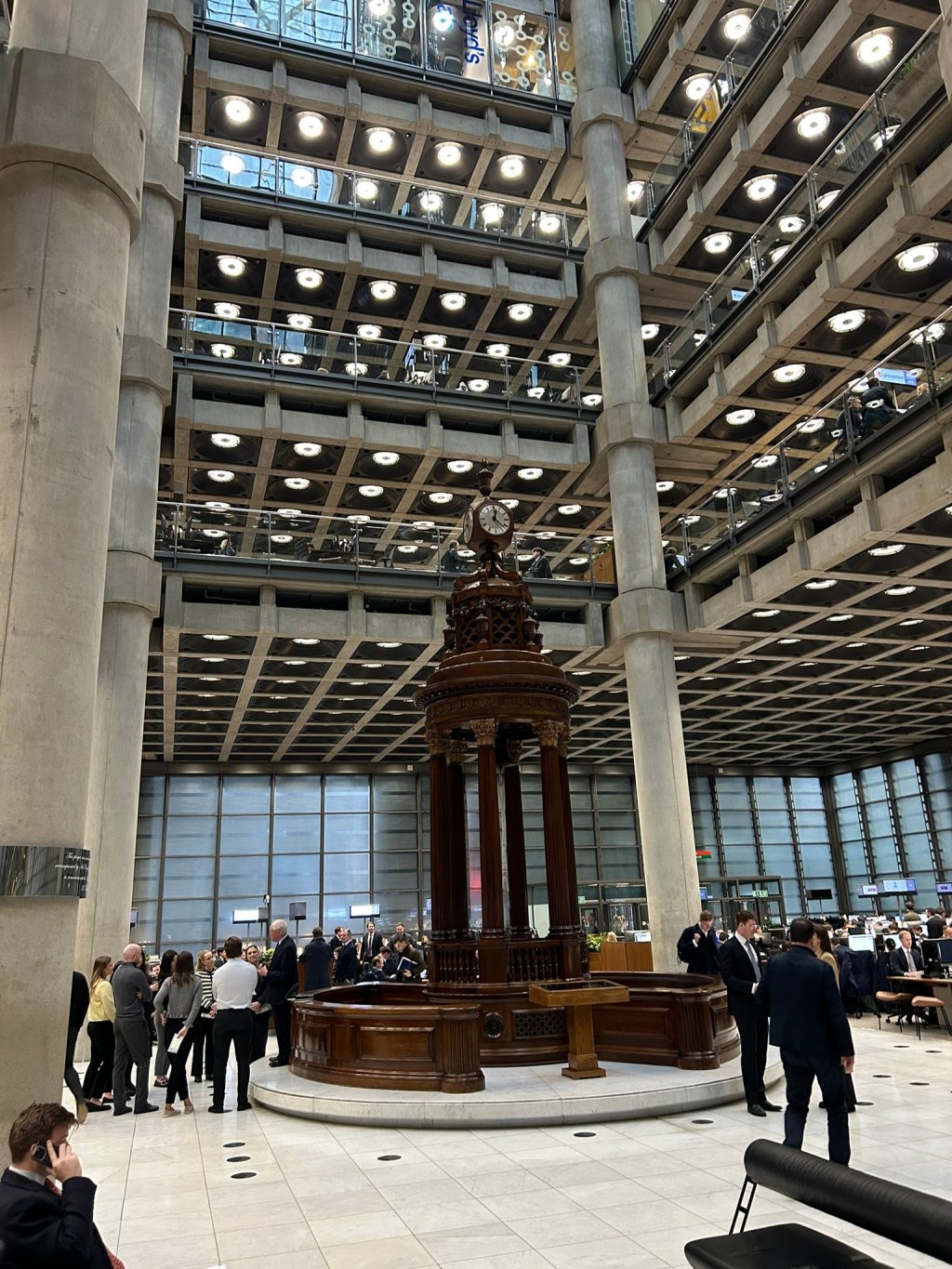
While Washington was assembling its facility, Lloyd’s of London was already there.
The Lloyd’s Market Association surveyed its marine war market in the first week after hostilities began. The results: 88% of participants still had appetite for hull war risks. Over 90% for cargo. Premiums had spiked: Hormuz transits were attracting rates of 1.5% to 3% of hull value, with US and UK linked vessels paying toward the top of that range, but cover was available.
Lloyd’s CEO Patrick Tiernan confirmed it publicly. The London market never withdrew. It repriced because the risk had genuinely and dramatically changed: but it continued to quote.
This distinction matters. The prevailing political narrative in early March was that insurance had been “cancelled” and that this was why ships weren’t moving. The LMA explicitly pushed back: insurance was available. The reason ships weren’t moving was that crews wouldn’t sail into a war zone. No piece of paper, government-backed or commercial, changes that calculation.
That’s worth sitting with. The market did exactly what it’s supposed to do: it priced an extreme risk accurately and made cover available to those willing to accept it. The fact that few were willing isn’t a failure of insurance. It’s insurance working correctly: reflecting a reality that political statements prefer to gloss over.
What this actually tells us
There’s a popular misconception that insurance is a commodity. A thing you buy because you have to. A cost centre. A necessary friction.
Hormuz exposes that for what it is.
When geopolitics, energy security and global trade collide at their most extreme, the world doesn’t route around the insurance market. It can’t. The US government with its $40 billion facility, its naval assets, its political leverage, still needed commercial underwriters to make the thing function.
The reason is structural. Insurance isn’t just capital. It’s a mechanism for converting uncertainty into something manageable. It requires the ability to price risk with precision, distribute it across a global network of capital providers, and create contractual structures that all parties from shipowners, cargo interests, lenders, charterers understand and trust implicitly.
Governments can deploy warships. They can make statements. They can pledge capital. But they cannot replicate the infrastructure of risk transfer that the commercial market provides. Not quickly. Not at scale. And not with the granularity that individual risks demand.
The speed gap
There’s one more dimension to this that tends to get overlooked.
The DFC took five weeks to assemble its $40 billion facility. That included recruiting seven major insurers, establishing eligibility criteria, building a sanctions and KYC vetting process, and coordinating with CENTCOM and Treasury.
Lloyd’s underwriters were quoting Hormuz transits within days of the conflict starting.
That gap, between political announcement and actual risk transfer capability, is where the commercial market lives. It’s the difference between saying you’ll provide insurance and actually providing it. Between a press release and a signed slip.
In insurance, speed isn’t a nice-to-have. It is the product. The ability to assess, price and bind a risk while the broker is still on the phone is what makes the market the market. The DFC, for all its political backing, couldn’t match that. It wasn’t designed to.
The real validation
The instinct is to frame this as a story about government failure. It isn’t. The DFC facility may well prove useful: it adds reinsurance capacity at a moment when the market needs it, and it signals political commitment to keeping Hormuz open.
But the deeper story is about what insurance actually is.
It’s not a backstop. It’s not a safety net. It’s the mechanism that allows global trade to function in the first place. When the stakes were at their absolute highest: a war, a closed strait, oil prices spiking, 200 tankers stranded in the Gulf, the question wasn’t whether insurance was needed. It was who could actually deliver it.
The answer, even when a sovereign state tried to step in, was the market.
That’s not an opinion. That’s what happened.
 Underwritten Weekly
Leave a comment