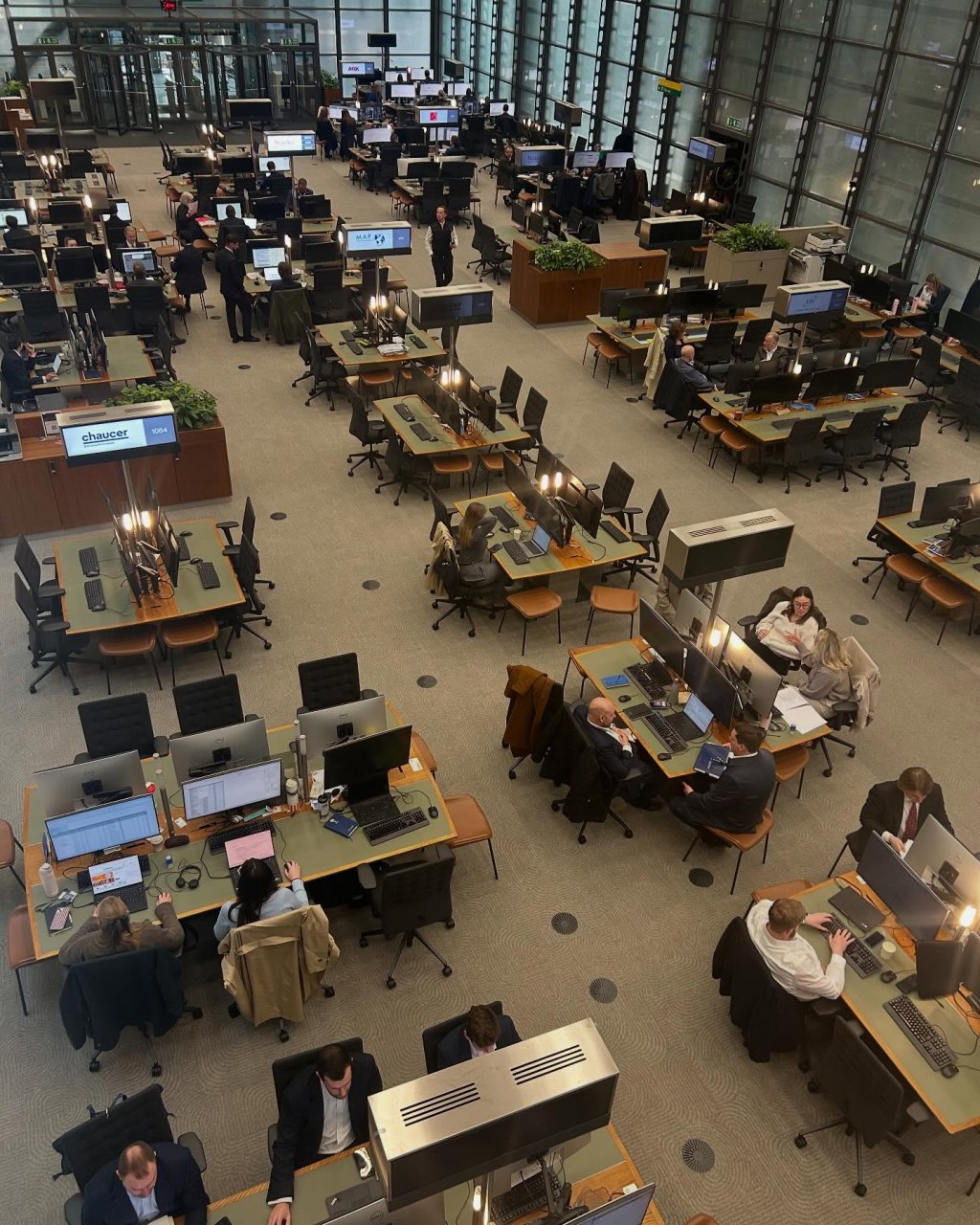
Last week, I got my Lloyd’s pass back.
Twelve years. Twelve years of standing at the front desk while someone with a phone, called someone with a lanyard, who called someone with a pass, who eventually appeared looking faintly irritated that a person who was here only last week wanted to enter the building. Again.
Twelve years of the very specific shame of being a grown adult who needs to be signed in like a visiting schoolboy.
No more. I am, once again, a person with a pass.
Naturally, I asked whether they’d be using the photo from my original one.
There was a pause.
“I think we’d be better with something a little more recent.”
Sadly, they were right. Twelve years ago, I didn’t have grey hair. Twelve years ago, I didn’t look like a tired Louis Theroux. Twelve years ago, at least I was still wearing a suit.
The new photo was taken. The pass was issued. And somewhere in a Lloyd’s database, the previous version of me was quietly retired in favour of something that more accurately reflected the evidence.
Which got me thinking about evidence. What it is. What it does. And what happens when you decide you don’t need it?
In the Pacific Ocean, spread across thirty million square kilometres of water, there are islands that get hit by cyclones the way the rest of us get hit by Mondays. Regularly, inevitably, and with a force that makes you question your life choices. The Pacific has approximately 25,000 islands. That’s irrelevant, but I looked it up at 11:30pm on a Saturday when I got home from the pub, and I’m putting it in this email, because otherwise what was the point?
For generations, when a cyclone came, the process was the same.
The storm hit. The damage was assessed. The forms were filed. The adjusters arrived. The arguments began. The money, eventually, came.
Months later. Sometimes years. By which point the farmer was forced to borrow to survive from whoever would lend, the market vendor had lost the stall she spent a lifetime building, and the fishing boat was still sitting wherever the storm left it.
This is not a criticism of the claims process. It is simply what happens when you must first prove what has been lost before anyone will pay for it. Evidence takes time. Evidence is expensive. And in a village on a Fijian island after a category four cyclone, evidence is sometimes sitting at the bottom of the sea.
Then our market, at its brilliant best, asked a question that sounds simple and isn’t.
What if we didn’t wait for the evidence?
What if we decided that the world’s most vulnerable people had waited long enough, and that we – this market, this industry, these people with their pens and their slips and their appetite for a risk nobody else will touch – could do something about it?
What if, instead of measuring the damage after the storm, you agreed the payout before it? You pick a trigger – wind speed, rainfall, earthquake magnitude – and you say: if that number is reached, the money arrives. Not after the assessment. Not after the adjuster. Not after the argument about whether the damage to the boat constitutes a total loss or merely a significant one. Not after seventeen emails about the excess.
When the wind hits the number, we reach for the chequebook*.
It’s called parametric insurance. And in the Pacific, it is changing everything.
Fijian farmers, fishers, market vendors – people who had spent their lives at the mercy of weather they couldn’t control and aid they couldn’t predict – now know something they never knew before:
If the storm is bad enough, the money will come. Not eventually. Not probably. Within days. Automatically. Because the wind said so.
The UN Development Programme called the 2023 and 2025 payouts a watershed moment. For the first time, communities that had relied on unpredictable aid and informal borrowing had certainty. The storm came. The threshold was crossed. The money arrived.
No adjuster. No forms. No argument about the boat.
That is just one of the things that should make us all proud of our market.
This works because someone, somewhere, in a room, did the hard work before the storm. They looked at a hundred years of cyclone data. They modelled the wind speeds. They argued about the triggers. They priced the risk of a storm that hadn’t happened yet, in a place most of them had never been, for people they would never meet.
And then they signed the slip.
That is our market. That is what it does when it is working at its absolute best. Not reacting to the world after it breaks. Getting there first. Doing the thinking, carrying the risk, so that when the wind hits the number, the only thing left to do is move the money.
Which brings me, with a subtlety I acknowledge I have entirely abandoned, to what we’re building.
The direction of travel in this market is toward decisions made on clean data, before anything goes wrong. Not waiting for the evidence. Understanding the risk so completely, so precisely, that by the time something happens, the hard work is already done.
That’s parametric insurance in the Pacific.
It’s what we’re helping to build here. And this week, our industry saved a Syrian village, and very probably lives, by issuing an instant $7.9 million payout from a parametric drought insurance policy.
On Thursday, in the Lloyd’s camera room, when they handed me my new pass, and with all the celestial inevitability of Edward Lloyd opening a coffee shop, we got onto the subject of why I love this market. They got a full 8:30am TED talk. They asked me a question you’ve all asked me. “Why are you so incredibly passionate about insurance?“
The answer, I hope, is becoming increasingly obvious.
The point of this nonsense is that you feel it too.
Have a good week.
Rob
P.S.
*I used that word despite knowing it would ruin the joke for many of you.
A chequebook?
Ask your parents.


Leave a comment