Underwritten Weekly

The risk behind the headline: A blog about the genuinely existing world of global insurance

  • Don’t worry, there isn’t one

    This week, we welcomed three new starters to the team.

    Each one joined a Teams call with me.

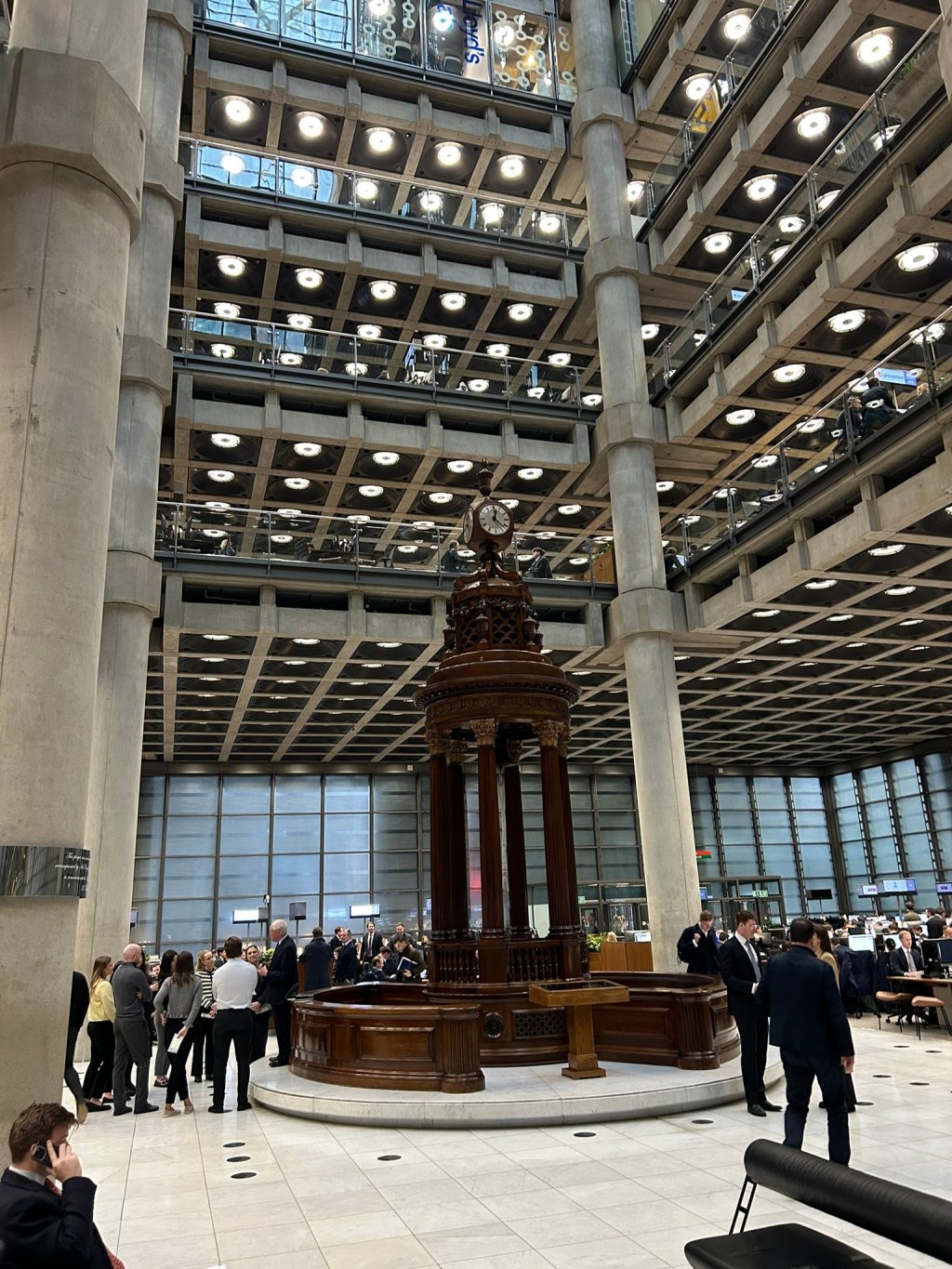
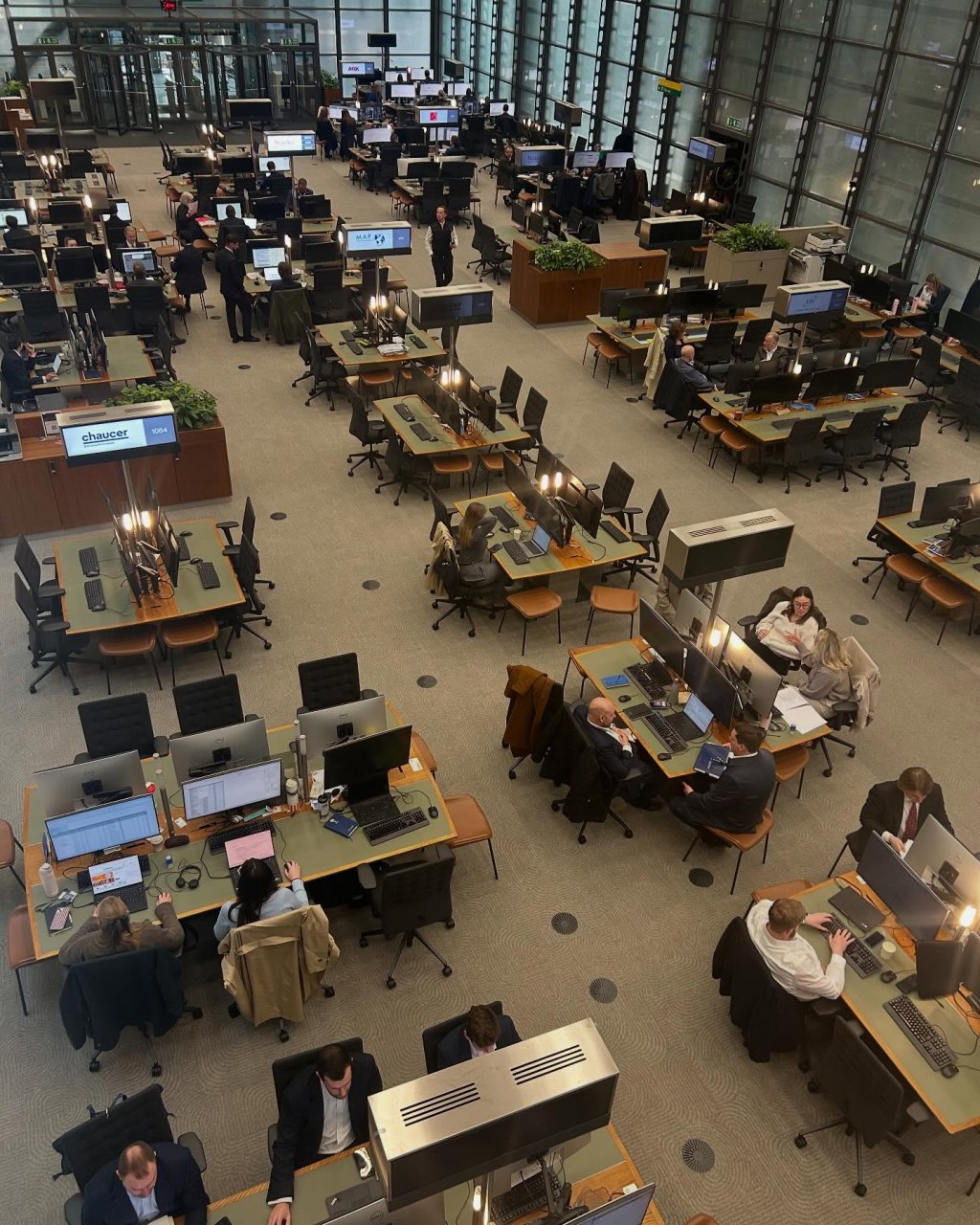
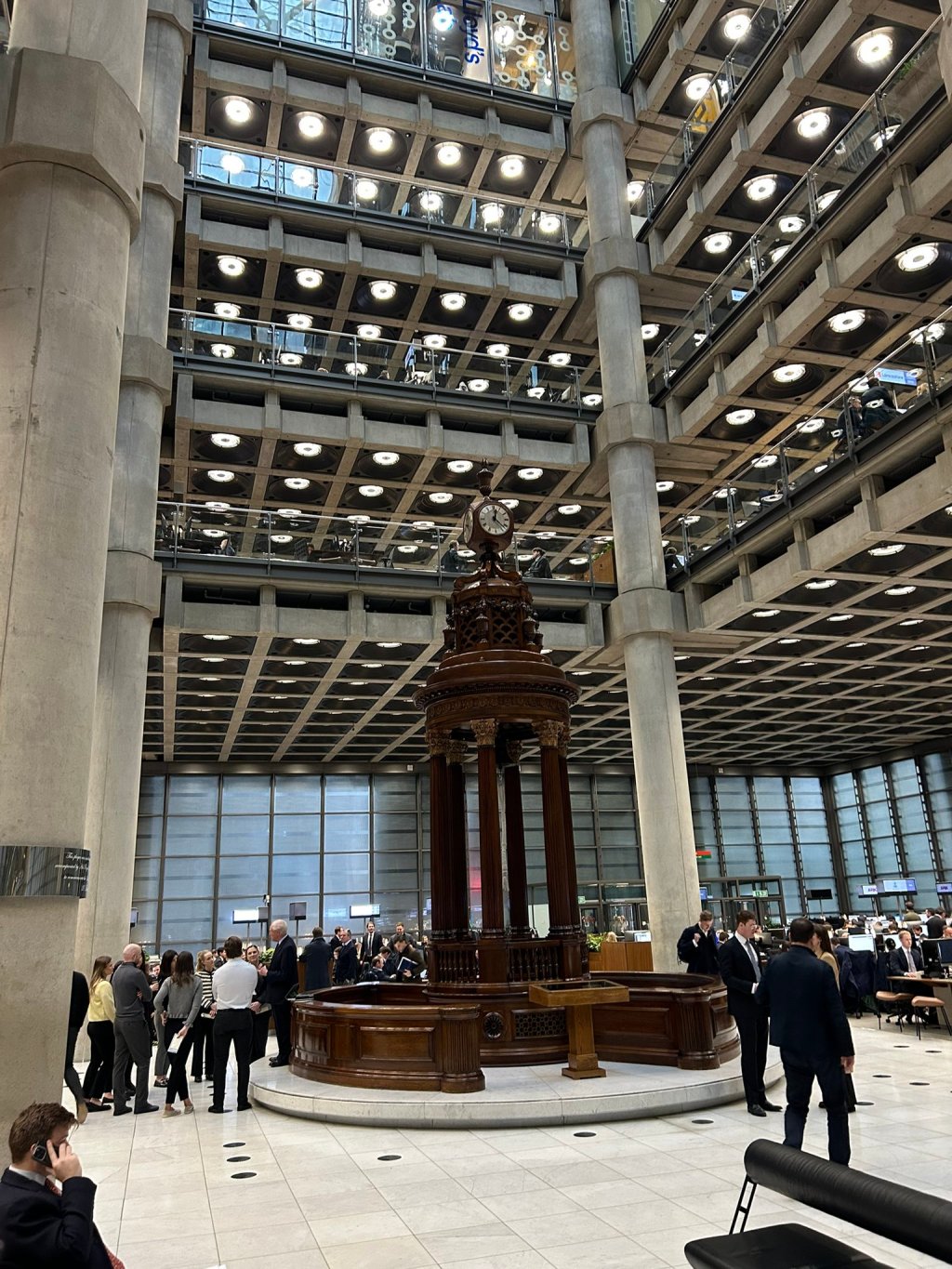
    Each one noticed the photograph of the Room on my living room wall.

    Each one asked what it was.

    Each one received an answer that was considerably longer than the question deserved.

    By the end of the call they knew about Edward Lloyd’s coffee shop. They knew about Cuthbert Heath. They knew why this market exists, and why a man they had known for approximately 24 hours has a framed photograph of an underwriting room hanging in his house.

    And I think each one, quietly, but ever so politely, wondered the same thing.

    Why that building? Why that photograph?

    Let me tell you about one of the many nights and days the building earned it.

    The Lloyd’s building opened in 1986. Richard Rogers. All those pipes on the outside, the lifts in glass capsules, the escalators running up the atrium like it was from a science fiction film. The market thought it was extraordinary. The City thought it was showing off. The architectural critics thought it was either genius or an act of considerable nerve, depending on who you asked.

    One year later, on the evening of Thursday 15th October 1987, BBC weatherman Michael Fish sat down in front of the nation and delivered the following reassurance.

    “Earlier on today, apparently, a woman rang the BBC and said she heard there was a hurricane on the way. Well, if you’re watching, don’t worry. There isn’t one.”

    There was.

    By 6am the following morning, the worst storm to hit Britain since 1703 had torn through the south of England. Winds of 115mph. Fifteen million trees felled. Power lines down across six counties. Roads impassable. Roofs gone*.

    And in every county across southern England, in every house and every office and every farm that had just lost something, the same thought arrived at roughly the same moment.

    I need to make a claim.

    What followed was unlike anything the insurance industry had ever seen. There were no call centres. There were no surge plans. There were no managed builder networks, no panel loss adjusters on standby, no digital claims systems. There was a telephone, a filing cabinet, and a very large number of people who needed help immediately.

    Claims arrived by post. By telephone. In person, at local offices, from people standing in the street with pieces of their roof in their hands.

    Not after seventeen emails about the excess.

    Not after a digital assessment and a chatbot triage.

    Not after a risk management review and a surge capacity activation protocol.

    They just showed up. And the market dealt with them.

    £1.4 billion in claims. Nearly half of total annual property insurance premiums, paid out from a single night’s work by a storm that nobody saw coming. The industry ran out of filing cabinets. It ran out of claims forms. It ran out, in at least one office, of paper.

    But it paid. Every valid claim. Slowly, chaotically, with filing cabinets borrowed from other floors and loss adjusters working seven days a week for months – but it paid.

    The building that everyone thought was showing off turned out to be exactly what you need when the world falls apart on a Thursday evening in October.

    That’s the photograph on my wall.

    Not the architecture. Not the pipes. The market inside it – the one that, when fifteen million trees came down without warning and half of England reached for the telephone at the same time, didn’t flinch.

    Our new starters joined a team building tools so that the next time something falls without warning – and something always falls without warning – nobody has to run out of filing cabinets.

    That’s what we’re building.

    Have a good week.

    Rob

    P.S. * What does a claims adjustor say to you if you lose 25% of your roof? Oof.

    P.P.S. There will be no Sunday Nonsense for the next two weeks. I’m in Morocco on holiday.

    See you in a couple of weeks, fans of nonsense.

  • The wind said so

    Last week, I got my Lloyd’s pass back.

    Twelve years. Twelve years of standing at the front desk while someone with a phone, called someone with a lanyard, who called someone with a pass, who eventually appeared looking faintly irritated that a person who was here only last week wanted to enter the building. Again.

    Twelve years of the very specific shame of being a grown adult who needs to be signed in like a visiting schoolboy.

    No more. I am, once again, a person with a pass.

    Naturally, I asked whether they’d be using the photo from my original one.

    There was a pause.

    “I think we’d be better with something a little more recent.”

    Sadly, they were right. Twelve years ago, I didn’t have grey hair. Twelve years ago, I didn’t look like a tired Louis Theroux. Twelve years ago, at least I was still wearing a suit.

    The new photo was taken. The pass was issued. And somewhere in a Lloyd’s database, the previous version of me was quietly retired in favour of something that more accurately reflected the evidence.

    Which got me thinking about evidence. What it is. What it does. And what happens when you decide you don’t need it?

    In the Pacific Ocean, spread across thirty million square kilometres of water, there are islands that get hit by cyclones the way the rest of us get hit by Mondays. Regularly, inevitably, and with a force that makes you question your life choices. The Pacific has approximately 25,000 islands. That’s irrelevant, but I looked it up at 11:30pm on a Saturday when I got home from the pub, and I’m putting it in this email, because otherwise what was the point?

    For generations, when a cyclone came, the process was the same.

    The storm hit. The damage was assessed. The forms were filed. The adjusters arrived. The arguments began. The money, eventually, came.

    Months later. Sometimes years. By which point the farmer was forced to borrow to survive from whoever would lend, the market vendor had lost the stall she spent a lifetime building, and the fishing boat was still sitting wherever the storm left it.

    This is not a criticism of the claims process. It is simply what happens when you must first prove what has been lost before anyone will pay for it. Evidence takes time. Evidence is expensive. And in a village on a Fijian island after a category four cyclone, evidence is sometimes sitting at the bottom of the sea.

    Then our market, at its brilliant best, asked a question that sounds simple and isn’t.

    What if we didn’t wait for the evidence?

    What if we decided that the world’s most vulnerable people had waited long enough, and that we – this market, this industry, these people with their pens and their slips and their appetite for a risk nobody else will touch – could do something about it?

    What if, instead of measuring the damage after the storm, you agreed the payout before it? You pick a trigger – wind speed, rainfall, earthquake magnitude – and you say: if that number is reached, the money arrives. Not after the assessment. Not after the adjuster. Not after the argument about whether the damage to the boat constitutes a total loss or merely a significant one. Not after seventeen emails about the excess.

    When the wind hits the number, we reach for the chequebook*.

    It’s called parametric insurance. And in the Pacific, it is changing everything.

    Fijian farmers, fishers, market vendors – people who had spent their lives at the mercy of weather they couldn’t control and aid they couldn’t predict – now know something they never knew before:

    If the storm is bad enough, the money will come. Not eventually. Not probably. Within days. Automatically. Because the wind said so.

    The UN Development Programme called the 2023 and 2025 payouts a watershed moment. For the first time, communities that had relied on unpredictable aid and informal borrowing had certainty. The storm came. The threshold was crossed. The money arrived.

    No adjuster. No forms. No argument about the boat.

    That is just one of the things that should make us all proud of our market.

    This works because someone, somewhere, in a room, did the hard work before the storm. They looked at a hundred years of cyclone data. They modelled the wind speeds. They argued about the triggers. They priced the risk of a storm that hadn’t happened yet, in a place most of them had never been, for people they would never meet.

    And then they signed the slip.

    That is our market. That is what it does when it is working at its absolute best. Not reacting to the world after it breaks. Getting there first. Doing the thinking, carrying the risk, so that when the wind hits the number, the only thing left to do is move the money.

    Which brings me, with a subtlety I acknowledge I have entirely abandoned, to what we’re building.

    The direction of travel in this market is toward decisions made on clean data, before anything goes wrong. Not waiting for the evidence. Understanding the risk so completely, so precisely, that by the time something happens, the hard work is already done.

    That’s parametric insurance in the Pacific.

    It’s what we’re helping to build here. And this week, our industry saved a Syrian village, and very probably lives, by issuing an instant $7.9 million payout from a parametric drought insurance policy.

    On Thursday, in the Lloyd’s camera room, when they handed me my new pass, and with all the celestial inevitability of Edward Lloyd opening a coffee shop, we got onto the subject of why I love this market. They got a full 8:30am TED talk. They asked me a question you’ve all asked me. “Why are you so incredibly passionate about insurance?

    The answer, I hope, is becoming increasingly obvious.

    The point of this nonsense is that you feel it too.

    Have a good week.

    Rob

    P.S.
    *I used that word despite knowing it would ruin the joke for many of you.
    A chequebook?
    Ask your parents.

  • Penguins and Policies

    Every week; I write my team a (hopefully) motivational email. Some people suggested I turn it into a blog. Here is this week’s (company and product name removed due to a tiresome online stalker)

    As you read this, the MV Hondius is sitting off the coast of Tenerife. You’ve probably seen it on the news. There’s been a hantavirus outbreak on board and the world is watching.

    I’m not going to talk about the outbreak. Other people are covering that and they should. What I want to talk about is the bit nobody on the news is talking about.

    Where does a ship go when nobody wants it?

    You’re a cruise ship in the middle of the Atlantic. You need to dock. Cape Verde says it can’t handle you. The president of the Canary Islands says “I cannot allow this ship to enter.” The WHO tells Spain it’s got a moral and legal obligation to let it. Politicians are on television pointing fingers. Diplomats are on phones. Governments are arguing.

    While all of that is happening, do you know what’s actually keeping that ship moving, keeping those passengers fed, keeping the fuel flowing and the medical supplies coming?

    Our market is.

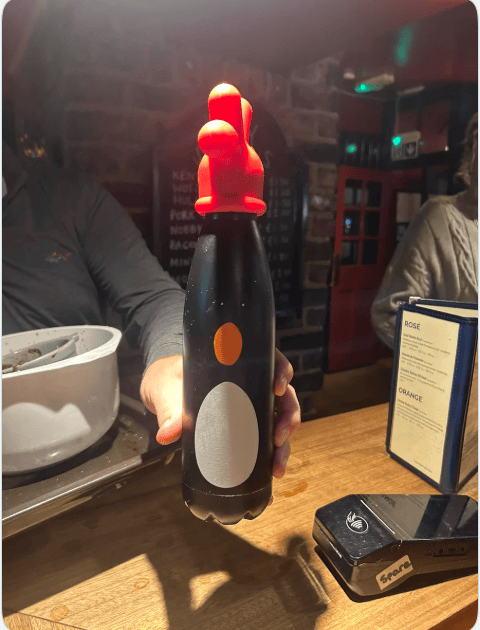
    Specifically, the protection and indemnity cover that someone priced months ago when this voyage was nothing more than a brochure with pictures of penguins and a promise of Antarctic sunsets.

    Months ago, an underwriter looked at an expedition cruise itinerary that included Antarctica, the South Atlantic, and several of the most remote islands on earth. The nearest hospital: days away. The nearest port willing to accept a ship in distress: possibly unknown. The medical facility on board: one doctor, some anti-inflammatories, and an oxygen tank.

    And that underwriter said: yes. I’ll price that. I’ll cover that.

    Cuthbert Heath, signing smallpox policies in the 1890s, would have recognised the instinct immediately. A risk that most people would walk away from. A voyage to the edge of the world? “Sure, why not?

    This is what our market does:

    Politicians are busy arguing,
    The ports are refusing access,
    The WHO is issuing statements,

    But the insurance industry was already standing by.
    It was there before the ship left Ushuaia
    It was there before the first passenger packed a suitcase.
    Someone, somewhere, in a room, with a pen, decided that this voyage was a risk worth taking.

    And here’s a thing:

    Expedition cruises are booming. Demand for Antarctic voyages has exploded. The risks are getting more complex, more remote, more novel. Every one of those ships needs underwriting. Every one of those itineraries needs pricing. Every one of those voyages needs someone to look at a route that goes to the literal end of the earth and say “I’ll take 7.5%

    The underwriters making those calls need the best data we can give them. They need to see the risk clearly, assess it quickly, and make a decision with confidence – because when something goes wrong at the bottom of the world, there’s no time to go back and check a spreadsheet.

    That’s <Product Name>. That’s what we’re building. Not for the routine risks. For the ones that make you pause. The ones where the nearest port might refuse you entry and the nearest hospital is a military evacuation away. The ones that matter.

    Somewhere in the Lloyd’s market right now, an underwriter is looking at the MV Hondius story and thinking about what it means for their next expedition cruise renewal.

    They’re going to need better tools.
    We’re building them.

    Have a good week.

    Rob

    P.S.

    Paul XXX, head of YYYYY, asked to join this email this week. Turns out we went to school together and didn’t know. This market is a village. Welcome to the nonsense, Paul. I’m sorry.

  • Read your emails

    Every weekend, I write my team an email, trying to explain how our work relates to the wider insurance market. Here is this weeks:


    Subject: Sunday Nonsense: Read your emails

    Some weeks, this email writes itself.

    A study by PYMNTS says that the average underwriter only gets to 40% of the submissions that land on their desk. The other 60% sits there, ages quietly, and either expires or gets declined by default.

    Not because the underwriter is bad at their job. Not because the risk wasn’t worth writing. Not even because they’ve had a very good lunch – although, frankly, if someone’s taken you to Leadenhall at 12:30 on a Thursday, getting to page 847 of a submission was never really on the cards.

    They don’t get to 60% because there aren’t enough hours in the day. Or because Leadenhall happened. Probably both.

    Jonathan Crystal, who spent two decades in brokerage before moving into insurtech startups, put it nicely: the industry spent 20 years and untold billions digitising its inbox without actually solving the problem. Paper became PDF. Fax became email attachment. Filing cabinets became servers. And still nobody actually read the submission.

    When you think about it, this is a problem as old as our market itself.

    Edward Lloyd didn’t build the most important insurance market in the world by accident. He built it by solving exactly one problem: getting the right information in front of the right people quickly enough to do something about it. Sailors came in. News travelled. Someone looked at a rotting hull bound for the West Indies, weighed the odds, and said “three percent.” The whole thing ran on signal – the ability to cut through the crap and actually make a decision. It was, in modern parlance, a workflow tool. Luckily, Edward Lloyd lived in a time before PowerPoint and business consultants.

    Three hundred and forty years later, we’re still solving the same problem. Just with more paperwork.

    Which brings me, with all the subtlety of a broker on his third Negroni, to <Product Name>.

    Filter. Score. Price. The wheel hasn’t changed. We’re just trying to make it spin faster – and make sure it spins at all for the 60% currently sitting unread in someone’s inbox.

    Crystal’s point about AI is not that it replaces underwriting judgment. It’s that it finally executes the models we already have, properly, for the first time. The risk’s always been there; but most of it went unnoticed. Rather like this email, which I’m sure most of you have been filing unread since January.

    Edward Lloyd’s coffee shop isn’t going anywhere.

    It just needs to read its emails.

    Have a good week.

    Rob

  • We are all Cuthbert Heath

    Every Sunday, I write my team a (hopefully) motivational email. Here’s this weeks:

    Subject: Mind your own business

    If Cuthbert Heath had just minded his own damn business like everyone else, <Product Name> would have just one class to onboard and I’d have my Sundays back. But no. He had to bloody well go and invent everything and now there’s <number of classes>. So if anyone is, he’s to blame for these increasingly ridiculous emails.

    Cuthbert Heath walked into Lloyd’s in 1880, aged 21, and found a market that only did one thing: marine insurance. Ships. Cargo. That was it. That was Lloyd’s.

    Heath looked at that and thought: why?

    When someone asked him, half-jokingly, to insure a property against burglary, he didn’t laugh. He uttered two words that ought to be carved into the walls of One Lime Street, because they changed our world forever: “Why not?

    Then he did it again. And again. And again. Burglary. Earthquake. Hurricane. Aviation. Employer’s liability. Credit risk. Smallpox – but only if you’d been vaccinated, because even in the 1890s Cuthbert Heath understood moral hazard.

    He collected maps of a hundred years of hurricane paths in the West Indies. He paid for historical earthquake records from South America, China, and India. He built a little black rating book that became so famous other underwriters asked to borrow it. And he lent it to them – because he’d rather his competitors priced properly than undercut him through ignorance.

    Rumours that <CUO Name> plans to do the same with <Product Name> are believed to be wide of the mark. Rumours that I’d tell other underwriters what it says for a few pints are believed to be depressingly accurate.

    Then San Francisco happened. April 1906. An 8.25 earthquake, fires that consumed the city. Our hero Cuthbert was the leading Lloyd’s earthquake underwriter. The bill was huge: over £50,000,000 in 1906. I’ll let you work out how much that is in today’s money, because we established last week I don’t do maths in these emails.

    His instruction to his San Francisco agent: pay all of our policyholders in full, irrespective of the terms of their policies.

    Not “check the wordings.
    Not “let’s see what we’re liable for.
    Not “what does the policy actually say?
    Pay them. All of them. In full. Right now.

    Saving cities. Rebuilding nations. We don’t tend to talk about it, because when you work in this market it’s considered a “business as usual” function. For any other industry this would be mind-blowing. For us, it’s just another Tuesday.

    That single decision built Lloyd’s reputation in America, and the world. It’s arguably the reason our market has the venerable and illustrious reputation it does today. It’s the reason shipping companies didn’t take up Trump’s offer to insure vessels sailing through Hormuz. Because they know that when something goes wrong, and it always does, a presidential press release doesn’t cut it. You need a market that always pays out. A market that has always paid out. A market that will always pay out. You need us.

    So why am I telling you this?

    Because Cuthbert Heath didn’t look at new risks and see problems. He saw the entire point of what we do. The market exists to say “why not?” – to find a way to price something nobody else will touch, and to pay when it goes wrong.

    He didn’t do it by guessing. He collected data obsessively. He researched. He built tools – maps, rating books, probability statistics – that let him take risks others wouldn’t, not because he was reckless, but because he understood them better than anyone else in The Room.

    I’ve toyed with you enough, time to admit we both know where this is going…

    That’s what <Product Name> is. Not a replacement for the underwriter. A better set of maps. A modern black book. The thing that lets our underwriters say “why not?” with confidence, because the data is already there, the noise is already filtered, and the work in front of them is the work that deserves them.

    Every single one of you is Cuthbert Heath. You’re building the tools that let this market do what it was always meant to do – say yes to risks that matter, pay when it counts, and move faster than anyone else in The Room.

    I appreciate I’ve just named you all after a Victorian with a hearing problem. I stand by it.

    Your name is Cuthbert. Wear it well.

    Have a good week.
    Rob

  • The Planes That Don’t Exist

    Right now, as you read this, there are roughly 400 commercial aircraft flying passengers around Russia that, legally speaking, no longer exist.

    They take off from Sheremetyevo. They land at Pulkovo. Families board them for holidays to Sochi. Business travellers sleep through the Novosibirsk redeye. The planes are real. The seats are real. The turbulence is extremely real. But according to the London Commercial Court, these aircraft suffered a total loss on 10 March 2022. They are, in insurance terms, gone.

    The largest aviation insurance loss in history, and it turns on a question that sounds simple but absolutely isn’t: what does it mean to lose something that hasn’t been destroyed?

    How Do You Lose 400 Planes?

    You’d think it’d be difficult. It is not.

    When Russia invaded Ukraine in February 2022, the Western sanctions response was fast and broad. EU and UK regulations prohibited leasing aircraft to Russian entities. The lessors, companies like AerCap, the world’s largest aircraft leasing firm, were legally required to terminate their leases and get their planes back.

    They tried. They issued grounding notices. They sent termination letters. They did everything the contracts said they should do.

    Russia’s response was blunt. On 10 March 2022, Government Resolution No. 311 banned the export of foreign-leased aircraft. A week later, new legislation let Russian airlines re-register these planes on the Russian civil aviation register, binning the certificates of airworthiness issued by Ireland and Bermuda where most had been registered.

    Translation: we’re keeping them. Good luck.

    The lessors couldn’t repossess. The airlines wouldn’t return. The Russian state had legislated to make sure of it. Around 500 aircraft, worth north of $10 billion, stuck behind a legal iron curtain.

    Dead But Flying

    Here’s the thing that makes this case genuinely weird. These planes aren’t sitting in hangars gathering dust. Russian airlines are operating them daily: domestic routes, international routes, carrying actual passengers and maintained, in a fashion, without Boeing or Airbus support, without legitimate spare parts, without the oversight frameworks that the rest of the world considers fairly important when it comes to keeping commercial aircraft in the air.

    The planes are alive in every practical sense. They burn fuel. They accumulate flight hours. They wear out.

    But the court says they’re dead.

    What Does “Lost” Actually Mean?

    This landed in the Commercial Court as a mega trial running from October 2024 to January 2025. Six lessors. 147 aircraft. 16 standalone engines. 18 Russian airlines including Aeroflot. Over $4.5 billion in insured value. About 70 barristers. The legal profession’s answer to a royal wedding, except everyone’s arguing about whether a plane you can see on FlightRadar24 counts as missing.

    Mr Justice Butcher’s test: as of any given date, was the deprivation of possession, on the balance of probabilities, permanent?

    Not “has the plane been destroyed” Not “is it damaged beyond repair” but: are you getting it back?

    He concluded the answer became no on 10 March 2022, when GR 311 came into force. From that moment, Russia had legislated against return. The political situation offered no realistic prospect of reversal. The planes were permanently lost, not because they’d ceased to exist, but because the lessors had been permanently deprived of them.

    Insurance is comfortable with destruction. A plane crashes, it burns, you count the wreckage and write a cheque. Deprivation without destruction is a different animal entirely. The insured asset is still out there, still functioning, still generating value: just not for you. Does that count as a total loss?

    It does. Apparently.

    Who Pays? (And Why AerCap Argued Against the Obvious)

    Aircraft insurance splits into two buckets: All Risks (AR) cover for the everyday stuff: crashes, mechanical failure, ground damage and War Risks (WR) cover for the geopolitical stuff: confiscation, seizure, detention by government order.

    Justice Butcher ruled this was a war risk loss. Russian government action. Restraint. Detention. Open and shut, you’d think.

    Except AerCap, the biggest claimant, actually argued it was an all-risks loss. Why would you fight to get your claim categorised as something it plainly isn’t?

    Money. AerCap’s war risk cover was capped at $1.2 billion against a total loss of about $2.1 billion. Their all-risks policy had no such cap. If you can squeeze a war into the “all risks” bucket, you get paid in full. If you can’t, you eat a billion-dollar shortfall.

    They couldn’t. The court held it was war risks, end of. AerCap recovered just over $1 billion: ok, not nothing, but roughly half what they’d lost. The insurance architecture, designed when nobody thought a G20 nation would nationalise 500 planes overnight, left a gap you could fly a 737 through. Which, ironically, someone in Russia is probably doing right now.

    The Grip of the Peril

    I love this one. Partly because it sounds like a le Carré title, partly because it’s doing more heavy lifting than almost any other doctrine in insurance law right now.

    Some war risk insurers had exercised review clauses to cancel their Russia cover before 10 March 2022. Their argument was clean: the loss happened after we’d cancelled. No policy, no claim. Sorry about your planes.

    The lessors’ response: grip of the peril. If an insured peril takes hold during the policy period, if it closes around you, then it doesn’t matter that the final blow lands after the policy expires. The peril had you in its grip while the cover was live. What followed was inevitable.

    Justice Butcher agreed. The Russian aviation authority had told airlines not to return aircraft as early as 5 March. GR 311 just formalised what was already happening. The peril had the lessors in its grip well before the insurers pulled the plug.

    This doctrine was relatively obscure before COVID. Justice Butcher himself built it out in the Stonegate pub closure case. Now it’s load-bearing for billions in aviation claims. One of those quiet legal principles that nobody outside a courtroom cares about until suddenly it’s the only thing standing between you and an uninsured loss the size of a small country’s GDP.

    What Happens Next

    It’s not over. Not even close.

    Chubb, Fidelis and Lloyd’s have permission to appeal. The Court of Appeal gets to decide whether Butcher was right on the war risk classification and the grip of the peril, and given there are billions riding on it, expect this to be fought hard.

    There’s a second wave coming too. The Operator Policy claims: under the Russian airlines’ own insurance, which lessors can access through cut-through clauses, goes to trial in October 2026. Under Russian law. A different legal system applying different principles to the same facts. That should be fun.

    And then the reinsurance cascade. Primary insurers pay out, claim from reinsurers, who claim from retrocessionaires, in the great chain of risk transfer that makes the whole market work. Every link is a potential fight.

    The Bit That Keeps Me Up at Night

    These aircraft are being flown without manufacturer support. No legitimate spare parts. No approved maintenance programmes. Russian airlines are cannibalising grounded planes for parts to keep the rest airborne. The airworthiness certificates that any Western regulator would want to see were suspended years ago.

    At some point, one of these planes is going to have a maintenance-related incident. It’s not pessimism, it’s statistics. And when it happens, the liability question will be unlike anything the market has seen. Who’s responsible for the airworthiness of a plane that was taken by government order, maintained outside every international framework, and flown on a registration that the original certifying authority doesn’t recognise?

    Nobody knows. But a lot of lawyers are going to find out.

    The $10 Billion Question

    Can insurance handle losses caused not by physical destruction but by geopolitical impossibility?

    The answer, for now, is yes but painfully, slowly, and with spectacular argument about who absorbs the hit. And the permanence question the court resolved isn’t unique to planes in Russia. It applies to any asset, anywhere, that becomes unreachable because the political ground shifts under it.

    Look at the world right now and tell me this is the last time it’ll happen.

    The planes are still flying. The insurance says they’re gone. Somewhere in that gap is the future of geopolitical risk transfer, and if the insurance market can’t figure out how to price it properly, the next $10 billion surprise is just a government resolution away.

    Until next week! Rob

  • The insurance problem only insurance can solve

    How the US government tried to replace the insurance market, but ended up proving why it can’t

    A few weeks ago, the United States government tried to do the insurance industry’s job.

    When the Strait of Hormuz effectively shut down after the US-Israel conflict with Iran began in late February, and war risk insurers issued cancellation notices, the White House stepped in. President Trump ordered the US Development Finance Corporation (DFC) to provide political risk insurance for all maritime trade through the Gulf. Naval escorts if needed. A $20 billion reinsurance facility. The full weight and might of the federal government behind it.

    This was, on paper, a remarkable moment. A sovereign state, the most powerful economy and military on earth, offering to underwrite one of the most critical straights in global trade. About a fifth of the world’s oil and liquefied natural gas flows through Hormuz. The stakes could hardly be higher.

    And then something revealing happened.

    The phone calls

    The DFC picked up the phone and called Chubb. Then Travelers. Then Liberty Mutual. Then Berkshire Hathaway, AIG, Starr and CNA. Within five weeks, the facility had doubled to $40 billion, and every dollar of it was being priced, underwritten and administered by commercial insurers.

    A DFC official was unusually candid about why: the agency doesn’t have actuaries. It doesn’t have the staff to be the focal point for the market.

    I love it: The US government announced a sovereign insurance guarantee for the most strategically important waterway on the planet only to discover it couldn’t deliver it without the industry it was ostensibly stepping in to replace.

    Chubb was named lead underwriter. Chubb sets the pricing. Chubb determines the terms. Chubb manages the claims. The government provides reinsurance capital and political authority. The market, via follow capacity, provides everything else.

    This isn’t a criticism of the DFC. It’s a structural observation. Insurance isn’t a product you can manufacture by presidential order. It requires actuarial expertise, distribution networks, claims infrastructure, and the trust of the people buying it. Shipowners aren’t protected by a press release. They need a policy wording they understand, issued by a party they trust, at a price that reflects the risk.

    That’s an extraordinarily difficult thing to build from scratch. The commercial insurance market has spent centuries building it.

    Meanwhile, in London

    While Washington was assembling its facility, Lloyd’s of London was already there.

    The Lloyd’s Market Association surveyed its marine war market in the first week after hostilities began. The results: 88% of participants still had appetite for hull war risks. Over 90% for cargo. Premiums had spiked: Hormuz transits were attracting rates of 1.5% to 3% of hull value, with US and UK linked vessels paying toward the top of that range, but cover was available.

    Lloyd’s CEO Patrick Tiernan confirmed it publicly. The London market never withdrew. It repriced because the risk had genuinely and dramatically changed: but it continued to quote.

    This distinction matters. The prevailing political narrative in early March was that insurance had been “cancelled” and that this was why ships weren’t moving. The LMA explicitly pushed back: insurance was available. The reason ships weren’t moving was that crews wouldn’t sail into a war zone. No piece of paper, government-backed or commercial, changes that calculation.

    That’s worth sitting with. The market did exactly what it’s supposed to do: it priced an extreme risk accurately and made cover available to those willing to accept it. The fact that few were willing isn’t a failure of insurance. It’s insurance working correctly: reflecting a reality that political statements prefer to gloss over.

    What this actually tells us

    There’s a popular misconception that insurance is a commodity. A thing you buy because you have to. A cost centre. A necessary friction.

    Hormuz exposes that for what it is.

    When geopolitics, energy security and global trade collide at their most extreme, the world doesn’t route around the insurance market. It can’t. The US government with its $40 billion facility, its naval assets, its political leverage, still needed commercial underwriters to make the thing function.

    The reason is structural. Insurance isn’t just capital. It’s a mechanism for converting uncertainty into something manageable. It requires the ability to price risk with precision, distribute it across a global network of capital providers, and create contractual structures that all parties from shipowners, cargo interests, lenders, charterers understand and trust implicitly.

    Governments can deploy warships. They can make statements. They can pledge capital. But they cannot replicate the infrastructure of risk transfer that the commercial market provides. Not quickly. Not at scale. And not with the granularity that individual risks demand.

    The speed gap

    There’s one more dimension to this that tends to get overlooked.

    The DFC took five weeks to assemble its $40 billion facility. That included recruiting seven major insurers, establishing eligibility criteria, building a sanctions and KYC vetting process, and coordinating with CENTCOM and Treasury.

    Lloyd’s underwriters were quoting Hormuz transits within days of the conflict starting.

    That gap, between political announcement and actual risk transfer capability, is where the commercial market lives. It’s the difference between saying you’ll provide insurance and actually providing it. Between a press release and a signed slip.

    In insurance, speed isn’t a nice-to-have. It is the product. The ability to assess, price and bind a risk while the broker is still on the phone is what makes the market the market. The DFC, for all its political backing, couldn’t match that. It wasn’t designed to.

    The real validation

    The instinct is to frame this as a story about government failure. It isn’t. The DFC facility may well prove useful: it adds reinsurance capacity at a moment when the market needs it, and it signals political commitment to keeping Hormuz open.

    But the deeper story is about what insurance actually is.

    It’s not a backstop. It’s not a safety net. It’s the mechanism that allows global trade to function in the first place. When the stakes were at their absolute highest: a war, a closed strait, oil prices spiking, 200 tankers stranded in the Gulf, the question wasn’t whether insurance was needed. It was who could actually deliver it.

    The answer, even when a sovereign state tried to step in, was the market.

    That’s not an opinion. That’s what happened.

  • A world without our market

    A World Without Our Market: An Awful Dream

    In which we remove one building from Lime Street and watch civilisation slowly unravel.

    It’s Monday morning. You wake up. You make your coffee. Everything feels normal. Except overnight, something has changed. Lloyd’s of London – your market, our market, the building, the concept, the whole bloody thing – has simply ceased to exist. Never happened. Edward Lloyd never opened his coffee house. The brokers never gathered. The underwriters never scratched a line.

    Nobody noticed at first. Then everything caught fire. Metaphorically. But also literally, because nobody could insure against it.

    Day One: Mild Confusion

    The first sign of trouble is surprisingly mundane. A cargo ship loaded with 40,000 tonnes of Brazilian coffee beans sets sail from Santos. The captain radios ahead. “Who’s covering us?” Silence. Not the dramatic kind. The kind where seventeen different people check their emails, find nothing, and quietly panic.

    The ship sails anyway. Three days later, it hits heavy weather in the mid-Atlantic. The cargo shifts. 40,000 tonnes of Brazilian coffee beans end up on the ocean floor. The shipping company calls its insurer. Its insurer doesn’t exist. The shipping company folds by Thursday.

    Meanwhile, a satellite launch in French Guiana is delayed. Not for technical reasons. The rocket is fine. The payload is fine. The weather is fine. But nobody can find anyone willing to say “yes, if this £400 million satellite explodes on the launchpad, we’ll pay for it.” Because the specific ecosystem of people who do that for a living – the ones who sit in a room on Lime Street, look at a risk that would make a normal person’s eyes water, and say “yeah, I’ll take 7.5% of that” – those people were never born, professionally speaking.

    The launch is postponed. Then cancelled. Then the whole programme is shelved.

    Space, it turns out, needs insurance.

    Week One: Things Get Weird

    Construction projects start stalling. Not because of supply chains or planning permission or the usual suspects. Because nobody can get contractors’ liability cover for anything genuinely complex.

    A hospital in Melbourne can’t open its new wing. An offshore wind farm in the North Sea sits half-built. The Channel Tunnel – or whatever version of it exists in this cursed timeline – is just a very expensive hole with water in it.

    Someone tries to set up a replacement. A group of bankers in New York announces “The Global Risk Exchange.” It lasts eleven days before they discover that pricing catastrophe risk is not, in fact, similar to pricing credit derivatives. They lose a spectacular amount of money on a typhoon in the Philippines and quietly close the doors.

    Nobody at the replacement thought to ask: “What happens when three bad things happen in the same quarter?

    We knew. We’ve always known. We’ve been answering that question since before electricity was invented.

    Month One: The Unravelling

    Airlines start grounding flights. Not all of them. But the ones flying over oceans, over conflict zones, over anywhere that isn’t extremely boring. Because aviation war risk cover – the very specific, very niche, very Lloyd’s product that keeps planes flying over conflict zones – doesn’t exist.

    Global shipping routes start changing. Vessels reroute around the Cape of Good Hope instead of through the Suez Canal, adding weeks to journey times, because hull war risk in the Red Sea is unplaceable. Container shipping costs triple. The price of everything goes up. Your Ikea bookshelf now costs £475.

    The film industry collapses. Not because people stop wanting entertainment. But because no one will insure a £200 million production against its lead actor doing something stupid on a motorcycle. Hollywood discovers that without completion guarantees and cast insurance, no studio will greenlight anything more ambitious than a man talking to a camera in a room.

    Every film is now a podcast.

    Month Three: Governments Panic

    Reinsurance – the insurance of insurance – barely functions. The companies that do exist are wildly overexposed, because the sophisticated retrocession market that Lloyd’s anchored simply isn’t there.

    A moderate earthquake hits central Italy. 6.1 on the Richter scale. Manageable. Except the local insurers can’t pay out, because their reinsurers can’t pay out, because the chain that would normally terminate in a room full of Lloyd’s syndicates terminates instead in a shrug, and an email that says “we regret to inform you.

    The Italian government bails out its insurance sector. Then the Spanish government. Then the Japanese government, after a fairly routine typhoon season turns into a full blown fiscal crisis.

    Central banks start asking a question they’ve never had to ask before: “How much of global economic stability was quietly being underwritten by 50,000 people in a postmodern building in London?”

    The answer, it turns out, is: an uncomfortable amount.

    Month Six: Someone Discovers the Problem

    A think tank publishes a paper. It has a boring title – something like “Systemic Risk Transfer Gaps in the Absence of Centralised Specialty Markets” (don’t lie, you know you can imagine reading something this dry) – but the conclusion is anything but boring.

    The paper argues, with charts, that approximately 40% of global economic activity depends on the existence of specialty insurance and reinsurance capacity. Not directly. Not obviously. But in the same way that oxygen isn’t obviously important until you try to breathe without it.

    Without Lloyd’s, the paper explains, you don’t just lose an insurance market. You lose the mechanism by which the world says: “Yes, that risk is real, but we can price it, share it, and carry on.

    You lose the collective ability to be brave.

    Year One: The New Normal

    The world adapts. Humans always do. But the adaptation is ugly.

    Governments become insurers of last resort for everything. Taxes go up. Innovation slows down. Nobody builds anything that hasn’t been built before, because nobody can transfer the risk of it going wrong.

    The economy doesn’t collapse. It just gets smaller. Duller. More cautious. The world without Lloyd’s is a world that takes fewer chances, builds fewer things, and moves more slowly.

    Nobody sits in a room scratching lines on slips of paper. Nobody argues about aggregation. Nobody looks at a risk that seems impossible and says, “Tell me more.

    And when things go wrong – as they always do – there is no one to call.

    And here’s the uncomfortable truth:

    None of this works by accident.

    It works because thousands of small, fast, well-informed decisions are made every day. Risks are understood. Data is gathered. Judgement is applied. Capital is deployed.

    And the difference between a market that functions – and one that quietly breaks – is how quickly and confidently those decisions can be made.

    Because while the world will never know our names, it only works because of us.

    But you know. I know. That’s enough.

    I would like to clarify that this is a work of fiction and not a formal market submission. No underwriters were harmed in the writing of this email. A few brokers were, but that was strictly for my own amusement. Lloyd’s continues to exist, which is why your bookshelf still costs a reasonable amount and satellites occasionally make it to orbit.